

Phonics isn’t just a buzzword tossed around in classrooms; it’s the secret sauce to unlocking the world of reading. Imagine a magical key that transforms letters into sounds, allowing young readers to decode words like pros. It’s like teaching them to speak the language of books—no translator required!
What Is Phonics?
Phonics refers to a method of teaching reading that emphasizes the relationship between letters and their corresponding sounds. It plays a crucial role in helping children decode words effectively. Through phonics instruction, young learners gain the ability to sound out letters and blend them together to form words.
This approach involves understanding phonemes, which are the smallest units of sound in a language. Learning to recognize these sounds aids children in reading and writing words. Phonics also helps students develop spelling skills, improving their overall literacy.
Additionally, various phonics programs exist, each designed to support different learning styles. Systematic phonics programs introduce sounds in a structured sequence. Explicit phonics instruction focuses on teaching specific sound-letter relationships. These diverse methods cater to the unique needs of learners, enhancing their reading abilities.
Moreover, research shows that phonics instruction significantly boosts reading success for young children. According to the National Reading Panel, explicit phonics instruction results in better reading outcomes compared to non-phonics approaches. Effective phonics education fosters a strong foundation, enabling children to read independently and confidently.
Engaging activities can reinforce phonics skills. Examples include phonics games, flashcards, and interactive reading exercises. These techniques offer fun ways for children to practice their phonics knowledge while developing a love for reading.
Ultimately, phonics serves as an essential tool in literacy development, allowing children to connect letters with sounds and become proficient readers.
The Importance of Phonics in Early Literacy
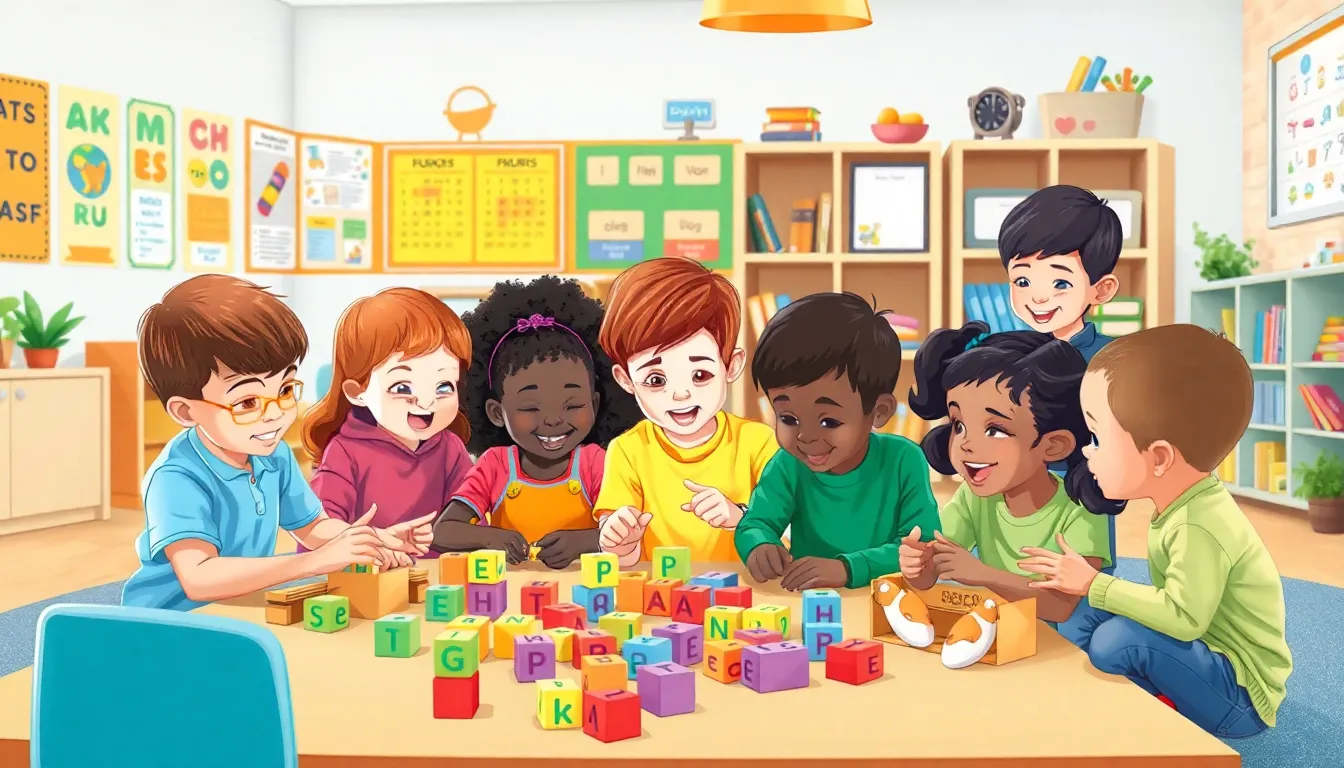
Phonics plays a vital role in the early stages of literacy development. Understanding the sound-letter relationship equips children with foundational reading skills.
Enhancing Reading Skills
Mastering phonics enhances children’s reading abilities. When children learn to associate letters with their sounds, they gain the capacity to decode unfamiliar words. This decoding process fosters independence in reading. Children also develop fluency, as consistent practice with phonics leads to improved pace and comprehension. Research shows that systematic phonics instruction produces stronger readers compared to non-phonics methods. Engaging, interactive activities further reinforce these skills, creating a fun learning atmosphere.
Building Vocabulary
Phonics instruction also contributes to vocabulary expansion. As children decode and spell words, they encounter new terms and phrases. Exposure to these words broadens their linguistic repertoire. This method helps them understand word structures, leading to better retention. A systematic phonics approach encourages exploration of varied word types, enhancing comprehension. Consistent practice results in a richer vocabulary, empowering children to express themselves more clearly and confidently.
Different Approaches to Phonics Instruction
Phonics instruction encompasses various methods. Each approach offers unique strategies to teach children the relationship between letters and sounds.
Synthetic Phonics
Synthetic phonics focuses on teaching individual sounds. Children learn to blend these sounds to form words. This method emphasizes explicit instruction and systematic progression. Many successful programs begin with basic phonemes, gradually introducing more complex sounds. Research supports that this approach enhances decoding skills and reading fluency. Teachers implement engaging activities, such as sound games and word-building exercises, to reinforce learning. The direct connection between sounds and letters plays a crucial role in helping children become confident readers.
Analytic Phonics
Analytic phonics emphasizes whole words rather than individual sounds. This method teaches children to analyze familiar words and break them down into their components. Instruction often begins with common sight words to facilitate recognition. Children learn to identify phonetic patterns in words, connecting their understanding to new vocabulary. Educators use context and meaning to support comprehension in this approach. Practices often include reading familiar texts, which enhance fluency and confidence. By fostering awareness of word structures, analytic phonics helps in developing spelling and analytical skills.
Phonics vs. Whole Language
Phonics and whole language represent two distinct approaches to reading instruction. Phonics emphasizes the relationship between letters and their sounds, enabling children to decode words. In this method, understanding letter-sound connections serves as a foundation for reading skills. Whole language promotes reading as a natural process, focusing on meaning, context, and literature appreciation.
Supporters of phonics argue that it provides essential decoding skills necessary for reading success. Research indicates that phonics instruction significantly enhances children’s ability to read unfamiliar words and improves overall literacy. Moreover, the explicit strategies unique to phonics yield better reading outcomes compared to non-phonics methods.
Conversely, advocates of whole language believe this approach fosters a love for reading and prioritizes comprehension. Children engage with rich texts, allowing them to recognize words in context. They also analyze themes and meanings, drawing on their prior knowledge to develop a deeper understanding of the material.
Each approach has merits that cater to different learners. Phonics methods often involve systematic instruction and practice with phonics games or activities, making learning engaging. Whole language emphasizes immersion in literature, encouraging children to interact with books they find enjoyable.
Phonics instruction often leads to increased fluency and confidence. Whole language can cultivate critical thinking and interpretation skills, making connections to real-world experiences. Both methodologies aim to enhance literacy development in diverse ways, showcasing the importance of tailored instruction that meets individual needs.
Phonics plays a pivotal role in shaping young readers’ abilities. By establishing a solid foundation in sound-letter relationships, it empowers children to decode words and enhances their overall literacy. The diverse methods of phonics instruction cater to various learning styles, ensuring that every child can benefit from tailored approaches.
As learners engage with phonics through interactive activities and systematic practice, they not only improve their reading fluency but also expand their vocabulary. This comprehensive skill set fosters a deeper understanding of language and boosts confidence in reading. Ultimately, phonics remains an indispensable tool in literacy education, equipping children with the skills they need to navigate the world of written language successfully.