


The cell membrane is a vital structure that serves as the boundary between a cell and its environment. Often described as a “fluid mosaic,” it plays a crucial role in protecting the cell while facilitating communication and transport. Understanding what a cell membrane looks like not only reveals its complex architecture but also highlights its essential functions in maintaining cellular integrity.
At first glance, the cell membrane may seem like a simple barrier, but its intricate design features a dynamic arrangement of lipids and proteins. This unique composition allows it to adapt and respond to various stimuli, making it a fascinating topic for anyone interested in biology. Exploring the appearance and structure of the cell membrane opens a window into the microscopic world that underpins all life.
Overview of Cell Membranes
Cell membranes serve as a crucial interface, separating the internal environment of a cell from the external surroundings. Comprised primarily of phospholipids, proteins, and carbohydrates, cell membranes display a “fluid mosaic” structure. This design enables flexibility, allowing the membrane to adjust based on environmental conditions and cellular needs.
Phospholipid bilayers form the foundation of cell membranes. Each phospholipid consists of a hydrophilic (water-attracting) head and two hydrophobic (water-repelling) tails. This arrangement creates a semi-permeable barrier that regulates the movement of substances in and out of the cell. Molecules such as oxygen and carbon dioxide pass through easily, while larger or charged substances require protein channels or transporters to facilitate their movement.
Proteins embedded within the lipid bilayer perform various functions. Integral proteins traverse the membrane, participating in transport and communication. Peripheral proteins, attached to the membrane’s surface, have roles in signaling and structural support. Glycoproteins and glycolipids, which have carbohydrate chains, contribute to cell recognition and interaction.
The dynamic nature of cell membranes allows for processes such as endocytosis and exocytosis. Endocytosis enables cells to engulf materials, while exocytosis expels waste or secretes substances. Understanding the cell membrane’s architecture and functional dynamics provides insights into its role in cellular processes, signaling mechanisms, and overall cellular health.
Structure of Cell Membranes
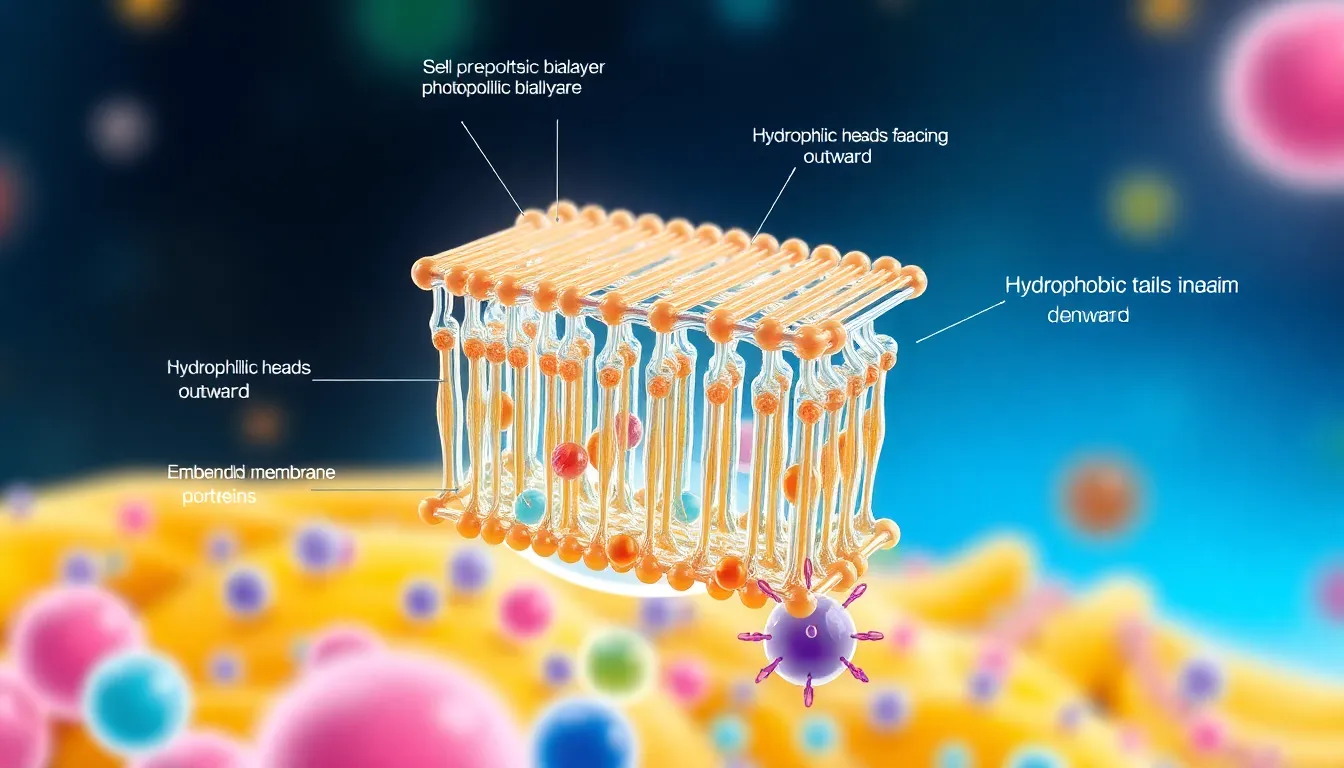
Cell membranes possess a distinctive structure that plays a vital role in their functionality. The composition of membranes includes phospholipids, proteins, and carbohydrates, each contributing to their dynamic characteristics.
Phospholipid Bilayer
The phospholipid bilayer acts as the fundamental component of the cell membrane. This layer consists of two rows of phospholipid molecules, with hydrophilic (water-attracting) heads facing outward and hydrophobic (water-repelling) tails facing inward. This arrangement creates a semi-permeable barrier, allowing selective passage of substances. The fluidity of the bilayer facilitates the movement of proteins and other molecules, adapting to changes in environmental conditions.
Membrane Proteins
Membrane proteins are embedded within the phospholipid bilayer and serve essential roles. Integral proteins span the membrane, assisting in transport and acting as channels or carriers. Peripheral proteins attach to the membrane’s surface, providing structural support and facilitating signaling processes. These proteins are crucial for functions such as cell communication, immune response, and nutrient transport.
Functions of Cell Membranes
Cell membranes perform essential functions that maintain cellular integrity and facilitate interactions with the environment. The structural components and fluid nature of the membrane enable various processes critical to the survival of the cell.
Communication and Signaling
Cell membranes play a vital role in communication and signaling between cells. Membrane proteins, such as receptors, bind to specific molecules like hormones and neurotransmitters. These interactions trigger cellular responses, activating pathways that regulate numerous functions, including growth, metabolism, and immune responses. Additionally, glycoproteins on the membrane’s surface aid in cell recognition, allowing cells to identify and respond to neighboring cells, pathogens, and environmental changes.
Transport Mechanisms
Transport mechanisms are crucial for moving substances across the cell membrane. Various types of transport include:
- Passive Transport: This process allows substances to move across the membrane without energy input. Molecules like oxygen and carbon dioxide diffuse freely along their concentration gradients.
- Facilitated Diffusion: Integral proteins assist in transporting larger or polar molecules, such as glucose, across the membrane without energy expenditure. This process also follows concentration gradients.
- Active Transport: Energy is utilized to move substances against their concentration gradients. For example, the sodium-potassium pump actively transports sodium ions out of the cell while bringing potassium ions in, maintaining essential ion balance.
- Bulk Transport: This includes endocytosis and exocytosis, where larger molecules or particles are engulfed or expelled from the cell. These processes require energy and allow the cell to regulate its internal environment.
Understanding these functions highlights the cell membrane’s importance in maintaining cellular health and facilitating interactions, crucial processes for life.
Visual Representation of Cell Membranes
Cell membranes exhibit a unique and intricate structure that reflects their crucial functions. The visual representation commonly illustrates a phospholipid bilayer where two layers of phospholipids align with hydrophilic heads oriented outward and hydrophobic tails pointing inward. This configuration establishes a semi-permeable barrier.
Key Features of the Cell Membrane:
- Phospholipid Bilayer: Forms the foundation, consisting of two rows of phospholipids. The hydrophilic heads interact with aqueous environments, while hydrophobic tails repel water, creating a stable barrier.
- Membrane Proteins: Integral proteins penetrate the bilayer, facilitating transport and acting as channels or carriers. Peripheral proteins attach to the membrane’s surface, providing structural support and aiding in cellular signaling.
- Carbohydrate Components: Glycoproteins and glycolipids, protruding from the membrane surface, play a vital role in cell recognition and communication, enhancing interaction between cells.
- Fluid Mosaic Model: The dynamic nature of the membrane allows components to move laterally within the bilayer, enabling cells to adapt to environmental changes.
Visualization Techniques:
Cell membranes are often visualized using techniques such as:
- Electron Microscopy: Provides detailed images of membrane structures, highlighting the arrangement of proteins and lipids.
- Fluorescence Microscopy: Utilizes fluorescent markers to track the movement of membrane components, illustrating the fluidity of the membrane.
Overall, the visual representation of cell membranes captures their intricate architecture and dynamic behavior, essential for various biological functions.
The cell membrane is a remarkable structure that plays a crucial role in maintaining cellular integrity and facilitating communication. Its fluid mosaic nature allows for flexibility and adaptability in response to environmental changes. This dynamic barrier not only regulates the movement of substances but also supports essential processes like signaling and cell recognition. By understanding the intricate design and functions of the cell membrane, one gains insight into the fundamental mechanisms that sustain life. The complexity of this structure highlights its importance in both health and disease, making it a vital area of study in cellular biology.


